Bamboo Flooring Buyers Guide
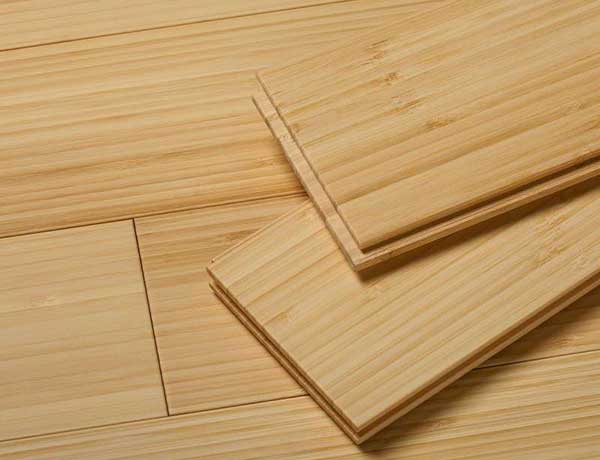
We’d like to provide comprehensive overview of bamboo flooring, detailing its advantages, types, durability, and considerations for purchasing. Bamboo is a fast-growing grass that offers an eco-friendly alternative to traditional hardwood flooring, appealing to environmentally conscious homeowners. Our guide here explains different types of bamboo flooring, which include horizontal, vertical, and strand-woven options, each with unique characteristics.
Bamboo flooring is a popular choice for eco-conscious homeowners due to its sustainability and performance benefits. Bamboo, a grass that grows rapidly, can reach 40-80 feet in just one year and matures over five years, thickening to 6-8 inches in diameter.
To manufacture bamboo flooring, stalks are sliced into 1/4-by3/4-inch strips, bound with powerful adhesives, and then milled into one of three main types of bamboo flooring: Horizontal Bamboo, Vertical Bamboo, and Strand-Woven Bamboo.
Horizontal Bamboo
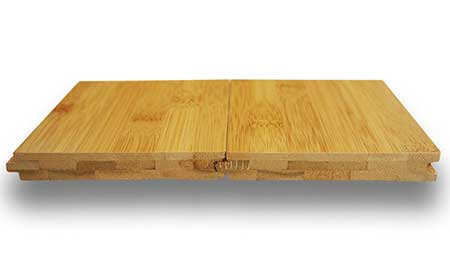
Horizontal Bamboo is made by adhering horizontal strips edge to edge, skin side up, showing nodes or “knuckles,” and offset layers add strength. Offset layers add strength. It comes natural, stained, and carbonized (heat-treated during manufacturing to give it a caramel-like hue).
Vertical Bamboo
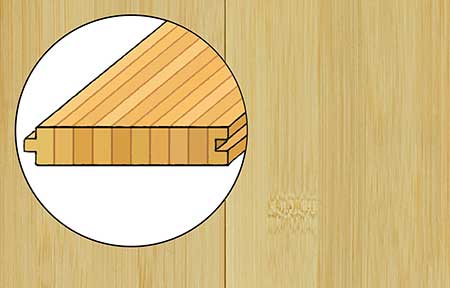
Vertical Bamboo is made by arranging strips with cut edges facing up, providing a linear look and less dents. Knuckles are much less noticeable, too. This flooring is available natural or carbonized but typically not stained, as the thin strips don’t absorb a stain as readily.
Strand-Woven Bamboo
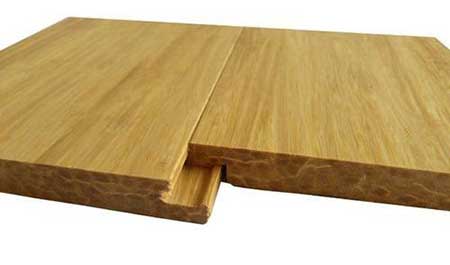
With this type, strips are soaked in adhesive, laid out lengthwise in various orientations, and then compressed in giant hydraulic presses, creating a solid rectangular mass milled into floorboards. The result is two to three times denser than other types of bamboo, lending itself to special finishes and surface treatments.
- Both horizontal bamboo flooring and vertical bamboo flooring are dimensionally stable products, meaning that they can be installed in areas with underfloor heating or rooms with fluctuations in temperature and humidity.
- Both types of bamboo flooring can either be glued down or loose laid over an underlayment.
- Both are easy to maintain and ideal for allergy sufferers.
- Both horizontal bamboo flooring and vertical bamboo flooring have a similar strength and durability to Oak flooring.
Bamboo Flooring Advantages
Bamboo flooring has advantages such as sustainability, durability, appearance, cost, and easy maintenance. It is a fast-renewing resource, ready to harvest in 5-6 years, offering a unique, modern look that complements various interior styles. It is generally less expensive than traditional hardwood options and is relatively easy to clean and maintain with regular sweeping and occasional damp mopping. However, bamboo can be susceptible to moisture damage, potential scratching, limited refinishing options, and potential off-gassing from lower-quality adhesives.
One of the biggest benefits of bamboo flooring is its durability, particularly strand-woven varieties. The Janka scale measures the hardness of flooring, which is often measured using the force required to embed a steel plank in a concrete block. This makes it an ideal choice for homes with high traffic areas or pet nails.
Disadvantages of Bamboo Flooring
Bamboo flooring has several disadvantages that may, or may not, be a problem for you. It is sensitive to moisture, making it unsuitable for wet areas. It can scratch in high-traffic locations or from pets, and lower-quality options may emit harmful VOCs. Additionally, the quality and durability of bamboo can vary based on the manufacturing process. The main disadvantage, from a long-term perspective, is that some bamboo types are hard to refinish. Many bamboo flooring products are difficult to be sanded smoothly and are often not recommended for refinishing – opting for replacement instead. However, if you’re not planning on ever refinishing it’s not a problem. Since bamboo floors are generally at a lower price point replacement isn’t the worst thing that can happen.
Color and Style Options
Bamboo flooring comes in many colors and styles to suit your design preferences.
- Natural: Light, honey-colored tones that showcase bamboo’s natural hue.
- Carbonized: Darker, caramel-like colors are achieved through heat treatment during manufacturing.
- Stained: A variety of colors from light to dark, including options that mimic different wood species.
- Textured: Some bamboo flooring options feature hand-scraped or distressed textures for a more rustic look.
Finish Types
There are also different finishes, each with differing appearances and durability levels.
- Factory-applied aluminum oxide: A highly durable finish that provides excellent wear resistance.
- Oil-based finishes: These create a matte appearance and are easier to touch up if damaged.
- Unfinished: Some bamboo flooring is available unfinished, allowing for custom staining and finishing on-site.
Spotting Quality Bamboo Flooring
When shopping for bamboo flooring, look for these quality indicators:
- Thickness: Solid boards typically come in 1/2 to 5/8 inch thick, while engineered planks are usually 3/8 to 1/2 inch. Choosing thick boards or engineered are generally the longest lasting.
- Hardness rating: Check the Janka hardness rating, especially if durability is a top concern.
- Certifications: Look for third-party certifications like FloorScore or GREENGUARD, which indicate low VOC emissions.
- Warranty: Check the warranty – even if you don’t think you’ll take advantage of it. It indicates higher quality.
- Manufacturing process: Strand-woven bamboo has a premium price, but is generally the most durable option.
Top Brands
Cali Bamboo
Cali Bamboo was founded in 2004, but is already one of the leading bamboo companies in the marketplace. This San Diego based company promotes bamboo as a eco-friendly building material. In addition to flooring, they offer a range of other bamboo products including high quality composite decking product that is made from 60% reclaimed bamboo fibers and 40% recycled plastic.
Home Legend
The Home Depot company stock a very comprehensive range of bamboo floor planks from Home Legend, with over 300 different bamboo products listed, including hand scraped, strand woven, horizontal, click lock and tongue and groove options, as well as bamboo molding.
Ambient BP Bamboo Floors
Established in 2005, Ambient bills itself as a one-stop shop for all your bamboo flooring needs. Ambient BP has an excellent reputation both with homeowners and professional designers; their website has a lot of great bamboo floor design ideas.
Plyboo
This company uses a soy-based resin that contains no formaldehyde. It is a more expensive product, and very creative designs, but these less toxic products are among the most beautiful of any bamboo flooring. Just order a sample and you’ll be convinced.
For more top brand reviews visit our page – BEST BAMBOO FLOORING BRANDS REVIEWED