Polyaspartic Floor Coatings: 5 Reasons Polyaspartic is the Best Choice
When choosing between epoxy and polyaspartic garage floor coatings, it’s important to understand their differences. Both are durable and attractive, but knowing their application, pros, and cons will help you make the best choice. I’ve painted quite a few floors and polyaspartic floor coatings are by far the best!
Polyaspartic floor coatings are quickly growing in popularity, due to their superior durability and appearance. But you may not be sure what it is. You can visit your local warehouse store and buy acrylic concrete paint, or for a bit higher cost epoxy paint, and both are straight forward to apply. Therefore you might wonder “why bother with a polyaspartic floor coating?” It costs more, and not as easy to apply. But there are significant advantages.
What is Epoxy Floor Coating?
Epoxy floor coating is probably the most popular floor coating used for garages at this time. You mix it up, roll it on, then spread flakes on it for color and to make it less slippery. It’s more durable than concrete paint, but less durable than Polyaspartic coatings. Cost is anywhere from $150-$200, and simple to apply.
Epoxy coating is a resin polymer used to protect concrete floors in garages. It works best indoors and creates a chemical-resistant, slip-free surface suitable for dealing with spills. The typical process involves applying a primer, a color base coat, and two polyurethane surface coatings. Epoxy flooring is customizable, allowing choices in color, finish, and the addition of color chips. This flexibility helps homeowners achieve the desired look and functionality for their garage floors.
How to Apply Epoxy to Your Floor
To apply epoxy floor coating, first ensure your concrete floor is suitable by checking moisture levels. Tape a plastic bag to the floor and check for moisture after a day. If moisture is present, install a moisture barrier before proceeding.
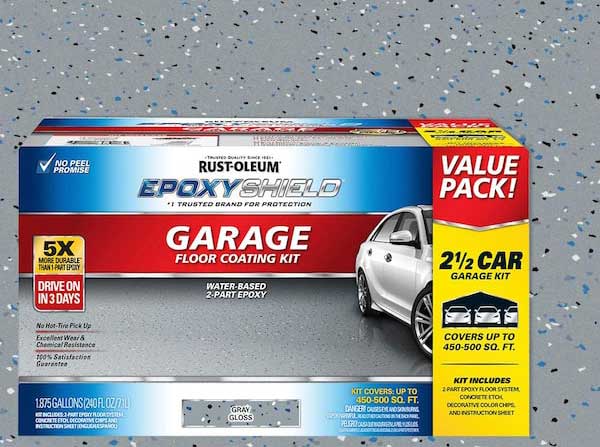
Applying epoxy is basically done manually with a roller. First it needs to be mixed. Then start by painting the edges with a bristle brush and then fill in the center with the roller. Wear protective breathing gear, like a respirator with an acid filter, as epoxy produces strong fumes.
Allow the first layer to dry for about 16 hours before applying a second layer. If desired, you can add non-skid granules after the second layer to prevent slipping. Drying time (with all the fumes), as you might guess, is one of the disadvantages of epoxy.
Advantages of Epoxy Garage Floor Coats
- Affordable: More costly than a standard acrylic floor paint, but less than Polyaspartic coatings .
- Durable: Epoxy can withstand the high traffic in your garage.
- Chemical-resistant: Regular battery acid and oil spills won’t be a problem.
- Long pot life: Taking longer to dry is a pain, but makes applying it easier and helps it adhere to the surface.
Cons of Epoxy Garage Flooring
- Temperature-sensitive: Epoxy is difficult to apply in extreme hot or cold temperatures.
- Drying time: Takes a week before you can drive on it, and weeks to fully cure.
- Fumes
- Rigid: Epoxy dries very rigid which makes it less durable requiring maintenance.
- Cost: Costs more than concrete paint, and slightly more than epoxy.
The product in the top image is on Amazon for $217, which is expensive but comes highly rated:
Polyaspartic High Solids Topcoat Coating System – 2 Gallon Kit – Clear Coating Gloss Finish – Easy-to-Use 1:1 Mix Ratio – Protection to Adhesion, UV, Abrasion, & Scratches (Medium Cure)
What is a Polyaspartic Floor Coating
Polyaspartic floor coating is a fast-curing, durable, and chemically resistant coating that offers better UV stability than traditional epoxy for protecting concrete surfaces.
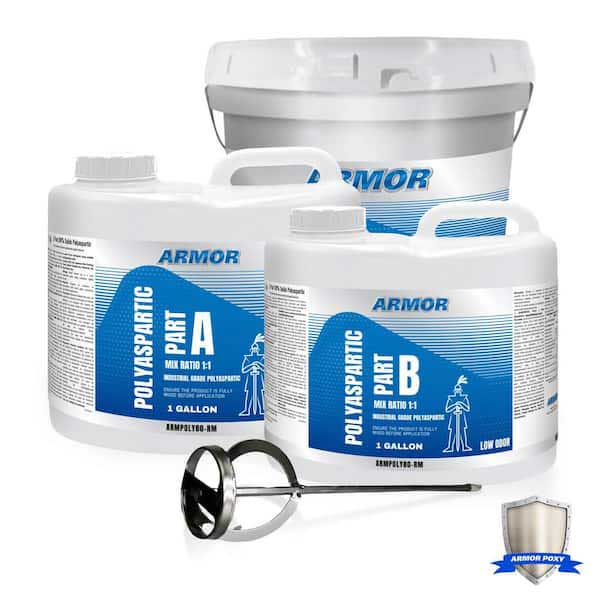
Polyaspartic is a hybrid material that resembles polyurethane. It was first developed in the ‘90s as a coating for steel in bridges and used for its corrosion-resistant properties. It is applied using a roller, squeegee or sprayer and is designed to form a rugged, waterproof, and durable coating over various surfaces. It has historically been used to protect steel and concrete from corrosion, on surfaces exposed to harsh conditions, in industrial and commercial applications. However, now it is now common in residential garage floors, and patios.
Some of the polyaspartic products have “poxy” in the name, but if it is not an epoxy. And, the price is much higher.
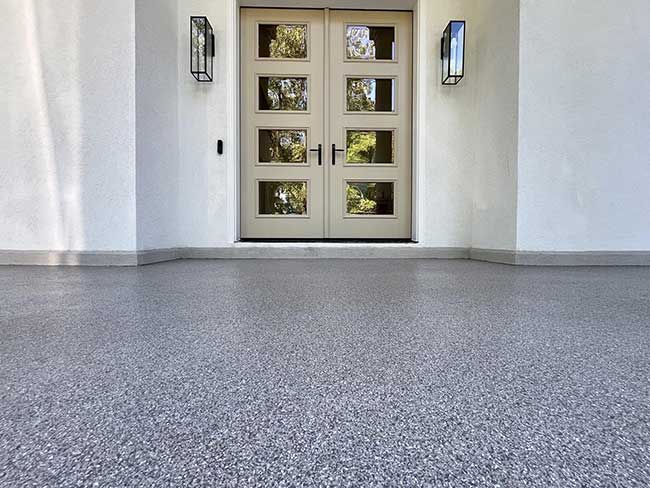
The coating typically has a clear, glossy finish that mimics a wet concrete floor. You can add color for a bolder appearance, and decorative flakes can be sprinkled on the wet coating for added color and slip resistance. The look is similar to epoxy painted floors.
Applying Polyaspartic Floor Coating
Polyaspartic coatings are typically a two-part system of a polyurea base coat—a polyurea coating is a type of protective coating made from a combination of isocyanate and resin—and an aliphatic polyaspartic top coat. The polyurea base coat strongly bonds the flooring surface, while the polyaspartic top coat provides a glossy, chemical and abrasion-resistant finish.
Just like with epoxy, polyaspartic won’t properly bond to concrete that gives off a lot of moisture. Be sure to test the moisture levels, and install a moisture barrier if necessary.
Actually applying polyaspartic is a speedy process, because it dries so quickly. The consistency and appearance of the material is much like water – it’s clear (when not using color additives), almost odorless, and very fluid.
Polyaspartic coatings are mixed similarly to epoxy, as both are two-part (2K) resin systems that require combining a resin base with a hardener/catalyst, but polyaspartics cure much faster. It’s usually applied with rollers, squeegees, or seal-coat brooms, though specialized spray equipment can be used, especially for traction layers or specific finishes. Installers spread it in thin, even coats, allowing for fast curing and multiple layers in one day, making it a popular choice for durable garage and concrete floor coatings. In an hour or less, the first coat will be dry enough to walk on, so you can begin the second coating.
Common Application Methods
- Roller: A 3/8″ nap roller is often used for even coverage.
- Squeegee/Broom: A squeegee or seal-coat broom helps spread the material.
- Spray: While less common for the main body, spraying might be used for a textured, anti-slip finish or by some specialized contractors.
The second layer will include any non-skid traction materials you might want to use. Polyaspartic is more slippery than epoxy, so this is always a good idea. Disperse them by sprinkling them over the top after the second coat is completely spread but not yet dry.
Polyaspartic coats dry super fast – lightening fast compared to epoxy or a typical acrylic paint. So, you’ll want to have the entire surface prepped before starting. And, since the product costs so much this may be good reason to hire a professional to avoid waste.
Advantages of Polyaspartic Flooring
- Durable: Generally more durable than epoxy, offering superior resistance to scratches, impacts, chemicals, UV rays, and temperature fluctuations. More durability also means lower maintenance than epoxy.
- Style: Just like with epoxy, plenty of options to customize and create a unique look.
- Quick drying time: Polyaspartic cures within 30 minutes to an hour.
- Air quality: Low VOC’s with virtually no odor.
- Colorfast: The color won’t fade or yellow
Disadvantages of Polyaspartic Flooring
- Expensive: Superior durability, however polyaspartic coating comes at a higher cost.
- Weakness to battery acid: If you’re a mechanic might need to consider this.
- Tricky application: DIY application is difficult.
- Problems with Moisture: It can’t be installed when high moisture is present. Concrete needs to be tested prior to applying.
Do It Yourself or Hire a Pro?
You can purchase Polyaspartic Flooring products at Home Depot, or Amazon and if you’re handy it’s not too difficult. Amazon offers a product by Simron (Visit the SIMIRON Store Here) which has good ratings. Home Depot offers a product by ARMORPOXY which also seems to have a good reputation. As far as professional services a company called Garage Living offers Polyaspartic flooring seems to have good customer reviews, however we have not personally used or hired any of the above services.